Choosing among the top Aluminium Sliding Window manufacturers requires more than comparing catalogue prices. Global buyers need evidence of performance, consistency, and responsible production. A polished brochure is not enough.
The International Energy Agency’s Buildings 2023 report states that buildings consume about 30% of global final energy. They also create around 26% of energy-related emissions. Window design directly influences daylight, ventilation, solar heat, and cooling demand. Therefore, manufacturers should provide tested U-values, air leakage results, water resistance data, and thermal-performance details. These records matter in both residential towers and compact commercial projects.
Material decisions matter too. The International Aluminium Institute reports that nearly 75% of all aluminium ever produced remains in use. This supports aluminium’s long service potential, especially when profiles are properly coated and maintained. However, recycling claims need verification. Buyers should request recycled-content percentages, chain-of-custody documents, and environmental product declarations where available. Not every supplier measures these items equally.
A reliable manufacturer can explain alloy grades, wall thickness, hardware brands, glass options, and maximum sash dimensions. Factory audits can reveal more than sales presentations. Look for extrusion control, powder-coating records, corner-joint quality, and packaging methods that protect frames during long-distance shipping. Small details become expensive problems.
No shortlist is perfect. Climate, building codes, installation skills, and freight conditions can change the final result. Some published market figures also differ by region and methodology. This guide therefore focuses on verifiable capabilities, documented testing, export experience, and practical buyer questions. The best manufacturer is not always the largest. It is the supplier that can repeatedly deliver suitable Aluminium Sliding Window systems for the project’s actual climate, budget, and compliance requirements.
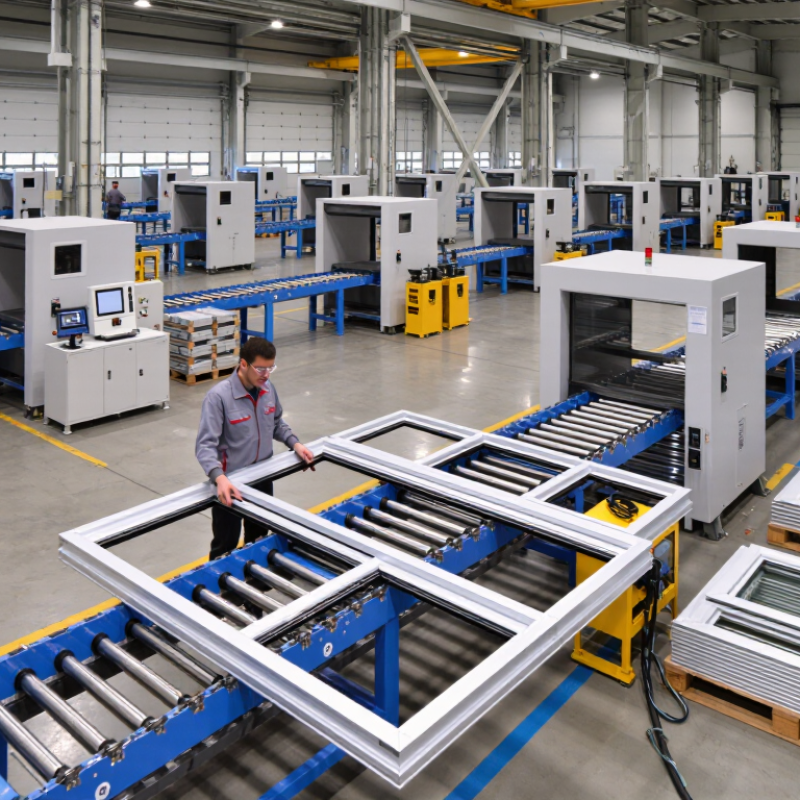
A leading aluminium sliding window manufacturer is defined by controlled performance, not a polished catalogue. It begins with alloy selection, accurate extrusion, and consistent wall thickness. Experienced teams inspect profiles for twist, scratches, and dimensional drift before assembly. Small errors matter. A two-millimetre mismatch can create uneven gaps, noisy movement, or water entry during wind-driven rain. Reliable manufacturers publish test data for air leakage, water resistance, wind pressure, and thermal performance. They explain test conditions instead of using vague claims. This makes comparison more honest for global buyers.
Hardware reveals practical expertise. Smooth rollers should carry the sash without excessive force, while locks need firm engagement after repeated cycles. Drainage paths must remain open after coating and assembly. Appropriate glass thickness, seals, and thermal breaks should match the project’s climate and building design. A serious supplier checks corner joints, coating adhesion, color consistency, and packaging protection. It also provides drawings, installation guidance, maintenance instructions, and traceable batch records. These details support architects, fabricators, and distributors long after shipment arrives.
No factory gets every decision right. Some manufacturers overemphasize appearance and underestimate installation tolerances. Others offer customization without checking tooling costs or lead times. Buyers should ask for samples, inspection reports, replacement-part policies, and references from comparable climates. Site feedback deserves attention, even when it exposes a recurring weakness. A manufacturer that records complaints, tests corrective actions, and updates production standards demonstrates accountability. Clear communication about limits is often more valuable than a promise of perfection.
Top Aluminium Sliding Window Manufacturers for Global Buyers
For global projects, leading manufacturers now focus on tested performance, not appearance alone. Their key products include thermally broken sliding systems, lift-and-slide doors, narrow-frame windows, and heavy-duty balcony units. Aluminium profiles should use polyamide thermal barriers, multi-chamber seals, and corrosion-resistant surface treatments. These details reduce heat transfer around the frame.
The U.S. Department of Energy estimates that windows can cause 25–30% of residential heating and cooling energy use. This makes low U-values, suitable solar heat gain coefficients, and airtight seals important selection criteria. Double glazing suits many climates, while triple glazing may improve comfort in colder regions. Yet heavier glass requires stronger rollers and reinforced tracks.
Testing should follow recognized standards. EN 12207 evaluates air permeability, EN 12208 covers watertightness, and EN 12210 measures wind resistance. The 2023 UNEP Global Status Report states that buildings consumed about 30% of global final energy in 2022. Better windows can support broader efficiency targets, but performance depends on installation quality.
Check it carefully.
Project buyers should request laboratory reports, profile wall thickness, hardware load ratings, drainage drawings, and warranty terms. Salt-spray testing matters for coastal sites. Powder coating may look durable, but poor pretreatment can still cause early failure. Manufacturers should also provide BIM files, replacement parts, and multilingual installation guidance. A strong catalogue is useful. Verified project evidence is better.
| Product Category | Typical Application | Common Configuration | Typical Sash Size Range | Aluminium Profile Features | Typical Glazing Options | Indicative Thermal Performance | Indicative Acoustic Performance | Weather and Safety Features | Recommended Project Type |
|---|---|---|---|---|---|---|---|---|---|
| Standard Aluminium Sliding Window | Apartments, residences, offices and low-rise commercial buildings | Two-panel or three-panel horizontal sliding system | Approximately 600–1,500 mm wide per moving sash; 600–2,400 mm high | Non-thermal-break profiles; hollow sections; stainless-steel or nylon rollers; adjustable sash alignment | Single 5–6 mm glass or insulated glass unit, commonly 5+9A+5 mm to 6+12A+6 mm | Typical whole-window U-value: approximately 2.5–4.5 W/m²·K, depending on frame, glass and size | Approximately Rw 25–32 dB with standard glazing and properly sealed installation | Interlocking meeting stiles, brush seals, drainage slots, anti-lift blocks and optional keyed locks | Cost-sensitive residential and warm-climate projects |
| Thermally Broken Sliding Window | Energy-efficient homes, hotels, schools and office buildings | Two-panel or multi-panel sliding arrangement with insulated frame sections | Approximately 700–1,800 mm wide per moving sash; 700–2,600 mm high | Polyamide thermal barrier, insulated frame chambers, EPDM gaskets and improved drainage design | Double or triple insulated glass; low-emissivity coating; argon-filled cavities; warm-edge spacer option | Typical whole-window U-value: approximately 1.0–2.2 W/m²·K, subject to tested configuration | Approximately Rw 30–38 dB with laminated or acoustic insulated glass | Multi-point locking, compression seals, controlled drainage, anti-derailment devices and optional restrictors | Cold and mixed climates, green buildings and projects with energy targets |
| Heavy-Duty Sliding Window | High-rise apartments, coastal properties and large residential openings | Large two-panel or three-panel system with reinforced rollers and tracks | Approximately 900–2,200 mm wide per sash; 800–3,000 mm high | Larger profile depth, reinforced interlocks, heavy-load rollers and corrosion-resistant hardware | 6–12 mm monolithic glass or double glazing up to approximately 32 mm overall thickness | Typical whole-window U-value: approximately 1.8–3.8 W/m²·K, depending on thermal design and glazing | Approximately Rw 28–36 dB with thicker or laminated glazing | Higher-capacity rollers, reinforced locks, wind-load calculations, anti-lift protection and optional safety glass | Large openings, high-wind zones and premium residential developments |
| Lift-and-Slide Window or Door System | Luxury residences, villas, hotels and indoor-outdoor living areas | Two, three or four-panel system with lifting hardware and recessed track options | Approximately 1,000–3,500 mm wide per panel; up to about 3,200 mm high, subject to glass weight | Deep reinforced profiles, stainless-steel rollers, low-friction tracks and flush sill options | Double or triple insulated glass; laminated safety glass; low-emissivity and solar-control coatings | Typical whole-window U-value: approximately 0.8–1.8 W/m²·K with thermally improved frames and insulated glass | Approximately Rw 32–42 dB with laminated acoustic insulated glass | Multi-point locking, compression gaskets, concealed drainage, anti-lift protection and optional child-safety control | Premium projects requiring wide clear openings and smooth operation |
| Acoustic Sliding Window | Urban housing, transport corridors, hotels and noise-sensitive buildings | Two-panel or fixed-plus-sliding configuration with enhanced sealing | Approximately 600–1,600 mm wide per sliding sash; 600–2,400 mm high | Tight interlocks, continuous gaskets, reinforced meeting rails and frame depth selected for acoustic glass | Laminated acoustic glass, asymmetric insulated glass and wider air cavities where compatible with the system | Typical whole-window U-value: approximately 1.2–2.8 W/m²·K, depending on glass and frame | Approximately Rw 35–45 dB when tested as a complete window assembly | Perimeter compression seals, sealed meeting rails, laminated safety glass and secure multi-point locking | Buildings near roads, railways, airports and dense city environments |
| Coastal and High-Corrosion Sliding Window | Seaside residences, resorts, marinas and humid tropical developments | Two-panel or multi-panel sliding system with corrosion-resistant hardware | Approximately 600–1,800 mm wide per sash; 600–2,600 mm high | Powder-coated or anodized aluminium, stainless-steel hardware, sealed drainage and reinforced corner joints | Tempered, laminated or insulated safety glass with solar-control coating where required | Typical whole-window U-value: approximately 1.5–3.8 W/m²·K, depending on thermal-break design and glazing | Approximately Rw 28–38 dB with sealed insulated or laminated glazing | Marine-grade stainless-steel components, durable surface finish, positive drainage and impact-resistant glass options | Coastal, tropical and salt-laden environments requiring enhanced durability |
| Fire-Egress Sliding Window | Bedrooms, serviced apartments and buildings requiring emergency escape openings | Sliding configuration designed around locally required clear-opening dimensions | Project-specific; clear opening must be verified against local building regulations | Low-force operating hardware, accessible handles, reinforced frame and controlled sash travel | Tempered or laminated safety glass selected according to location and code requirements | Performance depends on the selected frame and glass; thermal values should be confirmed by project testing | Acoustic rating depends on the glazing and ventilation requirements of the system | Quick-release or accessible hardware, safety glazing, restrictor options and code-compliant clear opening | Residential and hospitality projects where emergency escape access is required |
| Technical note: The values shown are typical industry ranges for preliminary global project comparison. Final performance depends on the complete tested assembly, including frame dimensions, glass specification, hardware, seals, installation method and local exposure conditions. U-values are expressed in W/m²·K; acoustic ratings are approximate Rw values in dB. | |||||||||
Top aluminium sliding window manufacturers should prove quality through repeatable controls, not polished brochures. During factory audits, buyers should inspect alloy certificates, extrusion records, and powder-coating thickness logs. A digital lot number should connect each frame to its billet, operator, and inspection result. Small details matter. Poor drainage can ruin a well-designed window.
Manufacturing should follow a documented quality system, such as ISO 9001, with calibrated gauges and corrective-action records. For international projects, ask for test reports covering air permeability, watertightness, and wind resistance under EN 1026, EN 1027, and EN 12211. Reports should identify the tested dimensions and date. Generic certificates are weak evidence. The U.S. Department of Energy estimates that windows account for 25–30% of residential heating and cooling energy use, so thermal breaks, glazing, and installation tolerances deserve close review. A low U-value alone does not guarantee field performance.
Environmental verification is also becoming practical. The International Aluminium Institute reported an average primary aluminium greenhouse-gas intensity of about 16.6 tonnes of CO2 equivalent per tonne in 2021. Manufacturers using recycled content should provide chain-of-custody evidence, not only marketing claims. ISO 14001 can support environmental management, while product declarations help compare embodied impacts. Still, certification does not remove every risk. A factory may pass an audit and miss corner-joint leakage during production. Random sampling, witnessed testing, and independent pre-shipment inspection remain valuable for global buyers.
EN 12208 watertightness test pressure benchmarks for windows and doors. Higher pressure classes indicate that a tested product withstands greater water pressure during laboratory testing.
Global buyers should request documented results for EN 12208 watertightness, EN 12207 air permeability, and EN 12210 wind resistance, together with traceable production and quality-control records.
Comparing suppliers begins with technical consistency, not attractive catalog photos. Request identical specifications for every quotation, including alloy grade, wall thickness, glass type, hardware, finishes, and thermal performance. For example, 6063-T5 aluminium may suit residential projects, but coastal buildings need stronger corrosion protection. Ask for test reports, production photographs, sample corners, and references from comparable climates. A reliable manufacturer should explain tolerances, drainage design, warranty limits, and replacement procedures clearly.
Pricing must be separated into product, tooling, packaging, inland transport, and shipping costs. Compare quotations using the same quantities and delivery terms. A low unit price can hide thin profiles, weaker rollers, or expensive minimum orders. Export capability matters just as much. Check whether the supplier handles commercial invoices, packing lists, certificates of origin, container loading, and destination-specific documentation. Confirm lead times in writing, especially during peak construction seasons. I have learned that even a detailed checklist can miss small issues, such as unsuitable carton sizes or unclear responsibility for damaged glass.
Tips: Ask for a landed-cost estimate. Review one physical sample. Test the locking action repeatedly. Confirm carton labels and spare-part availability. Keep payment milestones tied to measurable inspections. Do not judge reliability from fast replies alone; consistent records matter more. A video factory tour helps, but independent inspection remains wiser.
Selecting an aluminium sliding window manufacturer requires more than comparing catalogue prices. The right choice depends on your climate, building codes, installation methods, and project scale. According to the UNEP 2023 Global Status Report for Buildings, buildings consume about 30% of global final energy. Window performance therefore affects both operating costs and occupant comfort.
Ask manufacturers for tested U-values, air leakage results, water tightness, and wind-load ratings. These figures must match your local conditions. A coastal project needs stronger corrosion protection, while a high-rise building may require stricter pressure testing.
Check whether the supplier follows recognized standards, such as ISO quality systems or regional fenestration requirements. Request full test reports, not attractive brochure claims.
Experience matters during customization. Review previous projects with similar opening sizes, glass weights, drainage details, and delivery distances. A low quotation can look attractive. It may also conceal weak hardware or poor packaging.
Inspect sample corners, rollers, seals, and powder-coated surfaces before approval. Small details matter. Ask how damaged units are replaced and how technical support operates after delivery. I have seen projects delayed because drawings were approved too late, not because production was slow. That lesson deserves attention. A reliable manufacturer should provide clear shop drawings, realistic lead times, traceable materials, and installation guidance suited to your market.
Controlled production matters more than attractive catalogues. Profiles need accurate extrusion and consistent wall thickness. Small errors create gaps, noise, or leaks.
Request reports for air leakage, water resistance, wind pressure, and thermal performance. Test conditions should be clearly explained. Vague claims help nobody.
Polyamide thermal barriers reduce heat transfer through the frame. Multi-chamber seals also improve airtightness. Installation still affects the final result.
Double glazing suits many moderate climates. Triple glazing can improve comfort in colder regions. Heavier glass requires stronger rollers and reinforced tracks.
Rollers should move the sash without excessive force. Locks must engage firmly after repeated cycles. Movement should feel steady, not rough.
Ask for corrosion-resistant finishes and salt-spray testing. Drainage paths must remain open after coating and assembly. Coastal exposure is unforgiving.
Request drawings, laboratory reports, wall-thickness data, load ratings, drainage details, and warranty terms. BIM files and replacement-part information are also useful.
No factory gets every decision right. Some suppliers focus too much on appearance. Buyers should study samples, site feedback, and corrective-action records.
A well-tested window can still perform poorly when installed incorrectly. Uneven openings may cause binding, gaps, or water entry. This part is sometimes underestimated.
Choosing the right Aluminium Sliding Window manufacturer requires more than comparing product images or initial quotations. Leading manufacturers combine reliable design capabilities, precise engineering, durable materials, and consistent production processes to meet the demands of residential, commercial, and large-scale construction projects. Key considerations include frame strength, thermal and acoustic performance, corrosion resistance, smooth sliding systems, secure locking solutions, glass options, and customization for different climates and building standards.
Global buyers should also evaluate manufacturing standards, inspection procedures, testing records, and relevant certifications before placing an order. A dependable supplier should provide transparent pricing, clear specifications, stable lead times, professional packaging, and proven export experience. Comparing warranty terms, communication efficiency, after-sales support, minimum order quantities, and project references can help identify the best overall value rather than the lowest price. Ultimately, the ideal manufacturer is one that can adapt its Aluminium Sliding Window solutions to local market requirements while delivering consistent quality, dependable logistics, and long-term cooperation.

Kross Window