Choosing the right Aluminium Washroom Door from China requires more than comparing online prices. The lowest quote may hide thin panels, weak hinges, or unclear hardware specifications. A dependable decision begins with the door’s actual environment. Measure the opening carefully, including wall thickness, floor level, and available swing space. Public washrooms often face constant humidity, cleaning chemicals, and heavy daily traffic. Your door must handle these conditions without becoming difficult to maintain.
During supplier evaluation, request detailed drawings, material grades, surface treatment information, and recent production photos. A sample door can reveal more than a polished catalogue. Check its edge finishing, panel alignment, hinge movement, lock strength, and resistance to visible scratches. Ask whether the aluminium frame uses suitable alloy profiles and whether the core matches the project’s moisture requirements. Certificates are useful, but they should support practical evidence rather than replace it. Factory audits, quality inspection records, and clear after-sales terms also improve purchasing confidence. Small details matter.
Communication deserves equal attention. A capable manufacturer should confirm tolerances, packaging methods, installation needs, and delivery schedules in writing. One missed millimetre can create installation problems. It is also wise to compare several suppliers instead of trusting one impressive factory visit. Some information may remain incomplete, especially when product specifications are translated poorly. Review it again. A careful buyer should question unclear claims, test assumptions, and allow time for sample approval. With technical checks and realistic expectations, buyers can select an Aluminium Washroom Door that offers reliable performance, sensible maintenance, and lasting value.
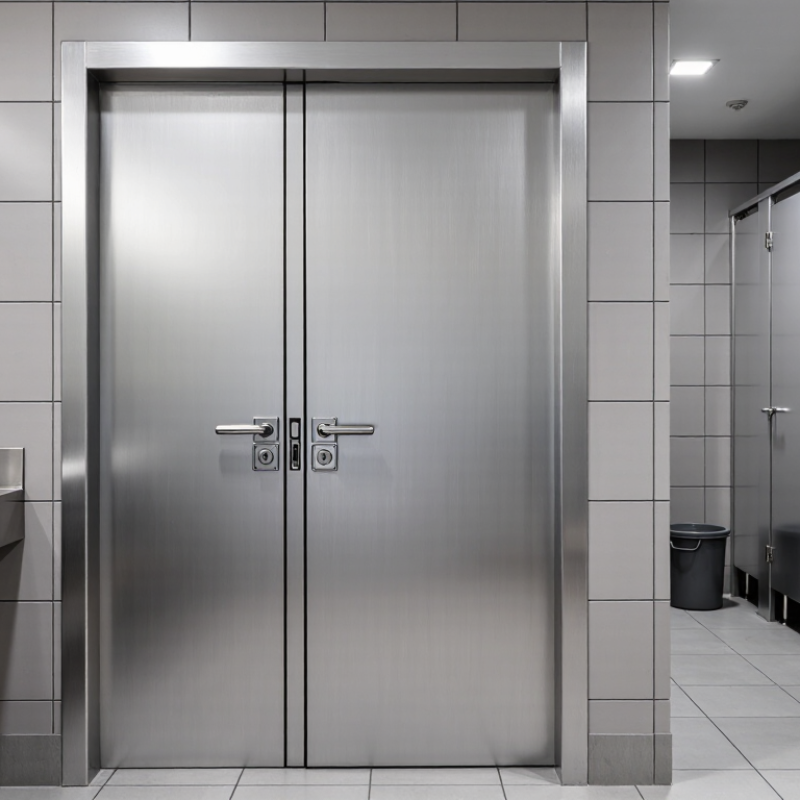
Choosing an aluminium washroom door from China starts with your washroom, not a catalogue. Measure the doorway at three points for width and height. Record the wall thickness, floor level, and nearby plumbing. An uneven floor can affect the door’s clearance and swing. Small errors become expensive after production. Do not trust one measurement.
Study how people use the room. A compact office washroom may need an outward-opening door for safer movement. A busy public facility may require stronger hinges and a wider clear opening. Decide whether privacy, ventilation, accessibility, or easy cleaning matters most. Then match the door layout to those priorities. Ask for the exact opening direction, frame depth, and hardware position. These details prevent avoidable revisions.
Aluminium performs well in humid interiors, but its finish and construction still matter. Check the alloy specification, surface treatment, panel thickness, and resistance to corrosion. Request technical drawings before approving production. A reliable supplier should explain tolerances, packaging, installation gaps, and inspection steps clearly. Photos can mislead. Ask for recent production images and sample measurements. If possible, inspect one finished door before ordering in quantity. I have seen attractive doors fail because the latch height ignored the existing wall tiles. That mistake is easy to overlook during design. Leave room for real site conditions, not just perfect drawings.
Define your washroom’s needs, layout, and doorway conditions before selecting the door size and configuration.
Choosing the best aluminium washroom door from China starts with the frame. Select a corrosion-resistant aluminium alloy with reinforced corners and accurate mitre joints. Thin profiles may reduce cost, but they can flex under repeated use. Check the frame width against the wall opening, especially in older buildings. Small measurement errors become visible after installation.
The panel should match the room’s moisture, traffic, and cleaning requirements. Compact laminate, aluminium honeycomb, and coated aluminium panels offer different levels of strength and weight. Ask for the actual panel thickness, not only the overall door thickness. For finishes, powder coating provides many colour options, while anodizing creates a metallic surface with a different texture. Request coating samples and inspect them under strong light. Colour differences sometimes appear between samples and production batches. I have learned that a beautiful finish is not enough if fingerprints or water marks remain obvious.
Tips: Specify stainless steel hinges, adjustable legs, and a lock designed for frequent public use. Confirm screw material, hinge load capacity, and spare hardware availability. Request a pre-production sample, installation drawings, and carton photos before shipment. Test the door swing and closing force yourself. A supplier may meet the drawing but miss practical comfort. Allow tolerance for uneven floors and wall movement. Small details matter.
| Component | Common Options or Typical Specifications | Key Performance Considerations | Suitable Applications | What to Confirm with the Supplier |
|---|---|---|---|---|
| Aluminium door frame | Extruded aluminium profiles; profile depth and wall thickness vary by door size, design, and project requirements. Surface finishes commonly include powder coating or anodizing. | A suitably designed profile helps maintain rigidity and alignment. Aluminium is resistant to corrosion, but finish quality and exposure conditions still matter. | Commercial washrooms, offices, schools, hotels, and other interior areas. | Ask for profile drawings, alloy and temper details, wall thickness, corner-joint construction, and compatibility with the specified wall opening. |
| Door panel | Options include an aluminium sheet-faced panel with a core, a framed panel, or a solid aluminium panel. Panel construction and thickness depend on the design. | Panel stiffness, weight, impact resistance, moisture exposure, and sound privacy depend on the complete construction, not just the outer sheet. | Lightweight interior doors and washroom cubicle or room-door applications, depending on the panel construction. | Confirm overall panel thickness, face-sheet thickness, core material, edge sealing, weight, and whether the panel is suitable for the expected humidity and cleaning routine. |
| Powder-coated finish | Dry-applied coating cured onto the aluminium; available in a range of colors and surface textures. | Provides a colored protective surface. Resistance to scratching, cleaning chemicals, and fading depends on coating specification, pretreatment, and use. | Most indoor washrooms where a consistent color or design finish is required. | Request coating specifications, color references, sample approval, pretreatment details, and care instructions. Check that touch-up requirements are understood. |
| Anodized finish | Electrochemical surface treatment that forms an oxide layer; often selected in natural or metallic-looking colors. | The finish becomes part of the aluminium surface and offers wear and corrosion resistance appropriate to its specified coating and environment. Color matching may vary between production batches. | Interior projects seeking a metallic appearance and a durable architectural finish. | Confirm the anodizing specification, color sample, appearance tolerance, and whether all visible parts will be finished consistently. |
| Hinges | Common choices include aluminium, stainless steel, or other corrosion-resistant hinge constructions; hinge type depends on door weight and opening design. | Correct load rating, secure fixing, alignment, and corrosion resistance are important for reliable operation in humid spaces. | Frequent-use washroom doors, with hinge selection matched to the panel weight and frame. | Check hinge material, load rating, fixing method, opening direction, adjustment range, and whether replacement parts are available. |
| Lock and indicator | Options include privacy locks with occupied/vacant indicators, emergency release, and, where appropriate, a lever or pull handle. | Washroom hardware should operate simply, provide privacy, and allow emergency access where required by the project. | Public and private washrooms in commercial or residential buildings. | Confirm lock function, emergency-release method, door thickness compatibility, handing, and applicable accessibility or building requirements. |
| Handle and fixing hardware | Lever handles, pull handles, screws, brackets, and other fittings may be supplied in aluminium or stainless steel. | Material, finish, and fixing strength affect durability and resistance to corrosion. Dissimilar metals in a damp environment may require suitable separation. | All door types; select hardware to match expected traffic and cleaning conditions. | Request a complete hardware schedule, material grade, finish details, fixing method, and confirmation that fasteners are suitable for the frame and panel. |
| Seals and bottom clearance | Optional perimeter seals, threshold details, or a clear gap at the bottom, as required by the door design and ventilation plan. | Seals can reduce drafts and sound transfer, while a planned bottom gap may support ventilation. The right arrangement depends on the room ventilation and water-control strategy. | Washrooms where privacy, ventilation, splash control, or acoustic performance needs to be balanced. | Confirm the required clearance, seal material, floor level tolerance, ventilation requirements, and whether the door is intended for wet or dry zones. |
| Packaging and quality checks | Protective film, corner protection, and export packaging should be matched to the shipping method and delivery distance. | Good packaging helps reduce scratches, dents, and finish damage during handling and transport. Inspection records help verify the agreed specifications. | Orders shipped domestically or internationally, especially multi-door projects. | Agree on inspection criteria, approved samples, packaging method, labeling, quantity checks, and documentation before production and shipment. |
Note: Specifications are project-dependent. Confirm local building and accessibility requirements, opening measurements, humidity exposure, and cleaning methods before placing an order.
Choosing an aluminium washroom door starts with four practical checks: moisture resistance, privacy, safety, and maintenance. In humid washrooms, water often collects around the lower frame and hinges. Ask the supplier for the aluminium grade, surface treatment, and corrosion test results. A powder-coated finish can resist daily moisture, but poor preparation may cause peeling. Inspect sample corners, screw points, and drainage gaps carefully. These small details often reveal production quality better than a polished product photo.
Tips: Request a full-size sample or a detailed video inspection. Spray water near the threshold and check for pooling. Test the lock with wet hands. Confirm whether replacement seals and hinges are available. Ask for installation drawings before placing a large order.
Privacy depends on more than an opaque panel. Check the panel gap, lock indicator, and door swing direction. In busy facilities, a reliable emergency release is essential. Rounded edges and finger-safe hinges reduce injury risks, especially in schools or public buildings. Maintenance should remain simple. Choose washable surfaces, stainless hardware, and accessible fasteners. I have seen attractive doors fail because installers ignored floor levels. That mistake is easy to overlook. Therefore, review the site measurements, ventilation, and cleaning routine with the supplier before approval.
Choosing an aluminium washroom door from China requires more than comparing online prices. Verify the supplier’s registered company details, factory address, export history, and production capacity. Ask for recent project references and arrange a live factory video call. Better still, use an independent auditor before placing a large order.
Ask for evidence.
A reliable supplier should provide material specifications, alloy grade, coating details, hardware information, and dimensional tolerances. Request a physical sample before approving mass production. Check the frame joints, hinge movement, edge finishing, and lock operation by hand.
Small details matter.
Quality controls should include incoming material checks, in-process inspections, final measurement, and protective packaging. Photos with dates can support the records, but they cannot replace inspection.
Product compliance depends on the destination market and building project. Confirm applicable requirements for safety, accessibility, moisture resistance, fire performance, and chemical emissions where relevant. Request complete test reports, declarations, and traceable batch information. Do not accept copied certificates with unclear laboratories or mismatched product details.
A polished sample can still hide production problems.
I would include a pre-shipment inspection, even after a successful factory audit. No checklist catches everything. Clear drawings, approved samples, and written tolerances reduce costly misunderstandings, although small changes may still appear during production.
A sample is more useful than a polished catalogue image.
Request one complete door, including the frame, hinges, lock, seals, and surface finish. Check the panel thickness with a caliper. Open and close the door repeatedly. Listen for rattling. Inspect the lower edge, where moisture often causes trouble. I once focused too much on the colour and missed a weak hinge. That was a costly oversight.
Customization should begin with a measured drawing, not a casual message.
Confirm opening size, wall thickness, swing direction, ventilation gaps, and hardware positions. Ask whether the aluminium grade, coating method, and door core match the sample. Small changes can affect production time. They can also change the final price. Request a pre-production drawing and approve it in writing. Even then, colour differences may appear between batches. Samples are guides, not perfect promises.
Compare quotations line by line.
Separate door prices, packaging, tooling, inspection, and inland transport. A low unit price may exclude important items. Ask whether the offer uses EXW, FOB, CIF, or another shipping term. Confirm the named port, insurance responsibility, documents, and estimated delivery schedule. Get carton dimensions and gross weight before booking freight. Delays often begin with incomplete packing data. Allow room for mistakes. A supplier with clear specifications and consistent answers is usually safer than the cheapest option.
Start with the frame alloy, reinforced corners, and accurate mitre joints. Thin profiles may flex with repeated use. Measure the wall opening carefully.
Compact laminate, aluminium honeycomb, and coated aluminium offer different weights and strengths. Ask for the panel’s actual thickness. Overall door thickness can be misleading.
Request powder-coated and anodized samples, then inspect them under strong light. Check for fingerprints and water marks. A finish can look lovely and still be impractical.
Specify stainless steel hinges, adjustable legs, and a durable lock. Confirm hinge load capacity, screw material, and spare-parts availability. Test the closing force yourself.
Check registered company details, factory location, export history, and recent project references. Request a live factory video call or independent audit. Photos help, but they are not enough.
Check the frame joints, panel edges, hinge movement, lock operation, and lower edge. Open and close the door repeatedly. Listen for rattling. I once missed a weak hinge by focusing too much on colour.
Include opening size, wall thickness, swing direction, ventilation gaps, and hardware positions. Approve a pre-production drawing in writing. Small changes can affect cost and timing.
Separate door price, packaging, tooling, inspection, and transport. Confirm the shipping term, named port, insurance responsibility, documents, carton dimensions, and gross weight. Incomplete packing data can cause delays. Allow some room for surprises.
Choosing the best Aluminium Washroom Door from China begins with understanding your washroom’s practical requirements. Consider the available space, doorway dimensions, traffic level, ventilation, and whether the door should open inward, outward, or slide. Then compare frame construction, panel materials, surface finishes, hinges, locks, handles, and other hardware. A suitable door should resist humidity, corrosion, stains, and frequent cleaning while offering adequate privacy, safe operation, and easy maintenance.
Before placing an order, evaluate potential Chinese suppliers carefully. Review their production capabilities, inspection procedures, material consistency, and product documentation. Request samples to check color, thickness, alignment, finish quality, hardware performance, and overall durability. Discuss customization options, minimum order quantities, packaging, lead times, pricing, payment arrangements, and shipping terms in writing. It is also important to confirm that the selected Aluminium Washroom Door meets the technical and safety requirements applicable to its intended market. Careful comparison of design, quality, service, and total delivered cost will help you make a reliable purchasing decision.

Kross Window