China’s aluminium door and window sector has become a serious source of architectural products. Its manufacturers serve residential towers, villas, offices, hotels, and renovation projects. Yet factory size alone does not prove quality. Performance depends on system design, fabrication accuracy, glass selection, hardware, coating control, and installation practice.
As aluminium building-envelope specialist Robert Fell has noted, “Aluminium performs best when material strength is supported by careful design and responsible installation.” This principle matters when reviewing the China Top 10 Aluminium Doors And Windows Manufacturers. Strong companies should demonstrate thermal-break technology, tested air and water resistance, stable powder coating, accurate corner joints, and dependable after-sales support. Their products should also match recognised building standards and project requirements.
A useful comparison needs evidence. Company history, production capacity, export experience, certifications, and completed projects can reveal more than attractive brochures. Factory photographs help, but independent test reports matter more. Ask about profile thickness, glazing options, drainage paths, seal quality, and replacement hardware. Small details become visible during winter drafts, summer heat, heavy rain, or repeated daily opening.
No ranking is perfect. Public information may be incomplete, and some manufacturers present stronger marketing than documentation. That weakness deserves reflection. Buyers should request samples, inspect finishes under natural light, and verify performance claims before signing contracts. This guide offers a practical starting point, not a final purchasing decision. It focuses on manufacturers that combine engineering capability, production consistency, design flexibility, and service reliability for demanding aluminium door and window projects.
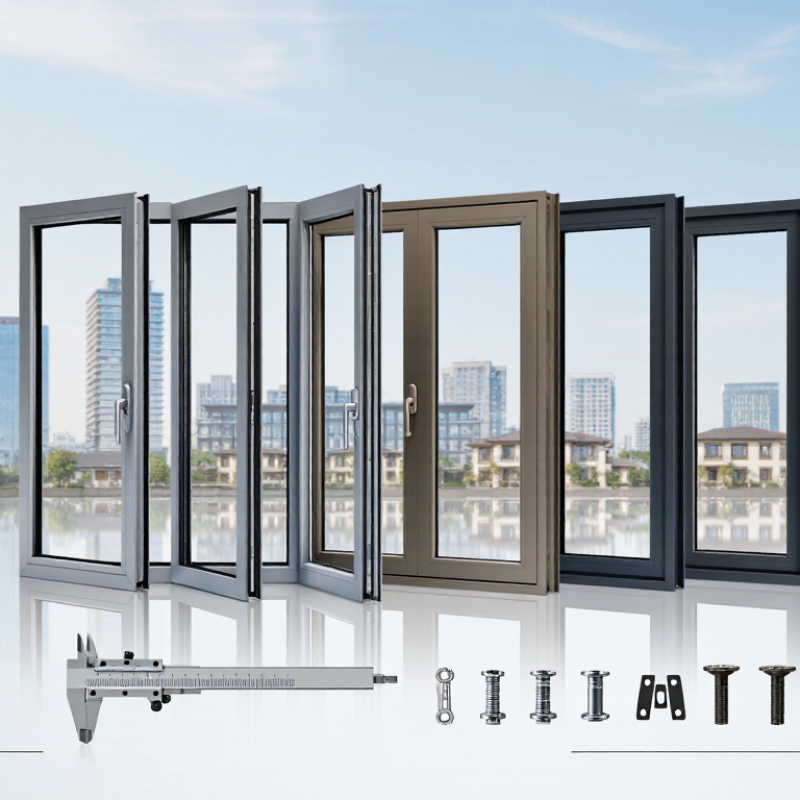
China’s aluminium doors and windows industry serves new housing, commercial buildings, public facilities, and renovation projects. Its scope extends beyond frame production. Manufacturers manage alloy extrusion, surface treatment, thermal-break assembly, glazing, hardware, testing, and site installation. According to the National Bureau of Statistics, China’s urbanization rate reached 67.00% at the end of 2024. That scale matters. It supports continuing demand for durable and energy-conscious openings, even when new property construction weakens.
Aluminium also gives China a strong industrial foundation. The International Aluminium Institute reported China produced about 41 million tonnes of primary aluminium in 2023, nearly 59% of global output. This supply depth supports large production capacity and fast customization. However, volume alone does not prove quality. Thermal performance depends on frame design, glass selection, sealing, drainage, and installation accuracy. A poorly fitted window can waste the benefits of a good profile.
The sector’s role is becoming more technical. Building owners increasingly assess air leakage, solar heat gain, acoustic control, corrosion resistance, and lifecycle maintenance. Standards and project testing therefore matter as much as appearance. Recycled aluminium can reduce material pressure, but recycling claims need traceable evidence and realistic energy accounting. That part remains imperfect. Manufacturers still need stronger data disclosure, better installation training, and more consistent performance verification across regional projects.
Common products include sliding doors, casement windows, folding systems, curtain walls, and thermal-break frames. Some factories also provide slim frames, insect screens, laminated glass, and custom finishes. Catalogues can look similar. Quality may differ significantly.
Request factory videos, equipment details, and recent sample records. Look for automated cutting, CNC machining, coating facilities, and controlled glass assembly. Check extrusion capacity and engineering staff. Machines alone do not prove reliable workmanship.
Request current reports covering air leakage, water resistance, wind pressure, thermal performance, and sound insulation. Each report should identify the tested system, configuration, date, and laboratory. A certificate without matching product details is weak evidence. That mistake happens often.
Installation is critical because poor fitting can waste a good frame’s benefits. Inspect drainage holes, frame joints, gasket compression, and sealing lines. Accurate installation improves comfort and reduces leakage. Factory quality cannot repair every site mistake.
Ask for alloy records, batch tracking, profile thickness, and coating information. Review glass specifications and hardware details together. Recycled material may reduce pressure on resources. However, recycling claims need traceable evidence and realistic energy calculations.
Compare complete window performance, not aluminium prices alone. Check whether quotations include glass, screens, finishes, testing, packaging, and hardware. The cheapest offer may omit important details. Low price feels attractive. It can become expensive later.
Look for protected corners, labeled hardware, and secure packing for long transport. Confirm lead times for unusual sizes and custom colors. Ask how damaged parts are replaced. Packaging sounds minor. It is not always minor.
Start with a small trial order when practical. Request shop drawings, installation guidance, sample approvals, and response-time commitments. Check whether custom sizes receive proper engineering or simple site adjustments. I would also verify completed-project references. No ranking remains perfect.
China’s Aluminium Doors And Windows industry plays an important role in residential, commercial, and industrial construction, supported by growing demand for energy efficiency, durable materials, modern design, and flexible building solutions. This article explains how to evaluate leading manufacturers by considering product quality, production capacity, technical expertise, certifications, delivery reliability, customization capabilities, and market coverage. It also presents an overview of ten representative Chinese manufacturers without focusing on brand promotion.
The discussion compares their product ranges, including doors, windows, curtain wall systems, thermal-break solutions, and customized architectural applications. It highlights manufacturing processes, material selection, surface treatments, quality control, and the ability to serve both domestic and international buyers. The article also outlines key purchasing considerations, such as project requirements, dimensions, glass and hardware options, insulation performance, installation support, lead times, after-sales service, and compliance with applicable standards. Together, these points provide a practical framework for selecting a suitable supplier.

 Kross Window