Choosing the best Chinese maker of Aluminium Bifold Doors is not a logo contest. It is a test of engineering, production control, and after-sales support. A showroom sample may glide smoothly, yet the installed system must handle daily use, wind-driven rain, and changing temperatures. Look closely at frame alloy and wall thickness, thermal-break design, roller capacity, locking points, glazing options, and drainage paths. Ask for project references, test reports, finish samples, and written warranty terms. Then compare like with like. Small details matter. A poorly adjusted panel can scrape its track; a blocked drainage slot can leave water sitting against the sill.
Architect Frank Lloyd Wright wrote, “Form follows function—that has been misunderstood. Form and function should be one, joined in a spiritual union.” Though he was not discussing modern bifold systems, the principle is relevant: slim sightlines mean little if panels bind or seals leak. This guide evaluates Chinese manufacturers through practical evidence, including product range, customization, quality checks, export experience, and service responsiveness. No single supplier is best for every project. A coastal home, a busy café, and a compact renovation may need different priorities. Ask manufacturers to explain their recommendations, not just send polished catalogs. Where claims lack independent documentation, treat them as unverified. That is less exciting. It is also safer buying advice.
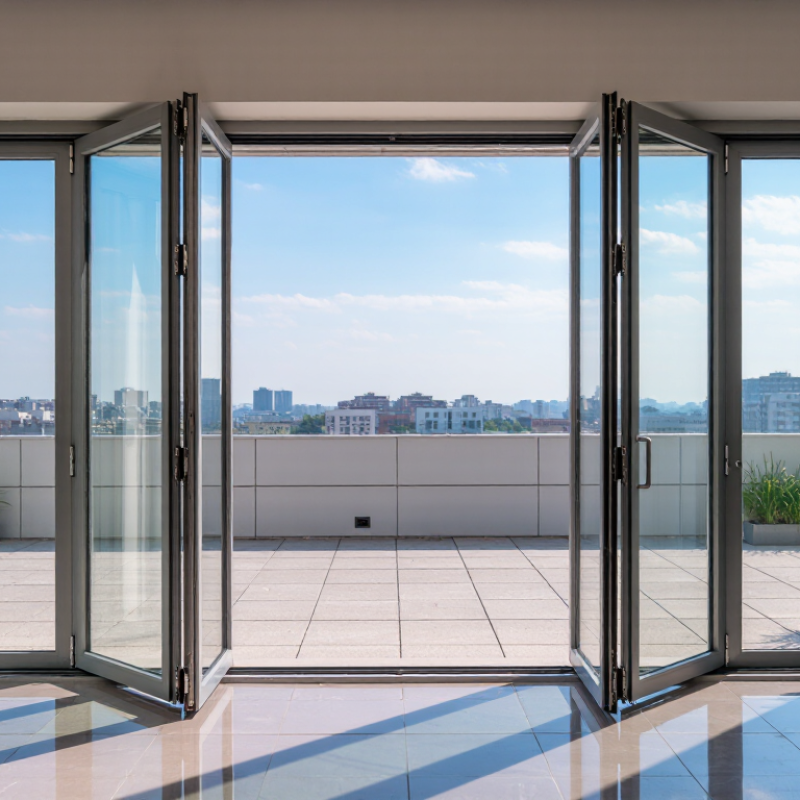
What Defines a High-Quality Aluminium Bifold Door?
A high-quality aluminium bifold door should feel controlled, not merely look sleek. Open and close each panel several times. The rollers should move smoothly, with no scraping, sudden drops, or excessive force. Check that the panels meet evenly when closed. Small details matter. Consistent gaps, firm handles, and secure locking points often reveal more than a polished showroom display. Ask about the frame’s alloy, profile depth, and thermal break. These affect strength and heat transfer, but the glass and installation matter too. A strong frame cannot compensate for poor fitting.
Look closely at drainage channels, weather seals, and corner joints. Water should have a clear route out, while seals should compress evenly without folding or pinching. Surface finish deserves scrutiny as well: inspect exposed edges and corners for thin coverage, scratches, or uneven colour. Specifications are useful, but request test data for air, water, and wind performance where available. Results depend on the tested configuration, not just the frame. One thing is easy to overlook: a large, well-made door can still feel awkward if its panels are poorly sized for the opening. There is no perfect checklist. A careful site measurement and a clear installation plan reduce unpleasant surprises.
How China’s Aluminium Bifold Door Industry Is Organized
China’s aluminium bifold door industry is a network, not a single production line. Extrusion plants shape aluminium profiles, while coating facilities apply finishes such as matte black or white. Glass processors, hardware suppliers, and door fabricators provide separate parts of the chain. Some companies coordinate several stages; others specialize in one.
Fabricators cut and assemble the profiles, fit rollers and hinges, and check that panels fold smoothly. A small adjustment can matter: uneven floor tracks may make a large door feel stiff. Many suppliers also work with overseas distributors or project teams, adapting sizes, glazing, and opening directions to an order. That matters. Yet the label “manufacturer” can be broad, and not every supplier controls the same steps.
Buyers can ask who makes the profiles, where the doors are assembled, and how finished units are inspected. Request drawings, hardware specifications, and written details about testing. Then compare those records with a sample corner or a complete operating unit. A polished showroom sample is useful, but it cannot show every production batch. I would also check how clearly a supplier discusses limits, such as maximum panel weight or unusual site conditions. That conversation may reveal more than a brochure.
Who Makes the Best Aluminium Bifold Doors in China?
How China’s Aluminium Bifold Door Industry Is Organized
China’s bifold-door supply chain typically spans system design and profile extrusion, component supply, door fabrication, distribution and project integration, and installation and after-sales service. The bars count common functions listed for each stage; they are a structural overview, not company counts, market shares, or a ranking of manufacturers.
Which Quality Standards Distinguish Leading Chinese Manufacturers?
Leading Chinese aluminium bifold-door manufacturers show quality through verified testing, not polished catalogues. The International Energy Agency’s Buildings report (2023) estimates that buildings use about 30% of global final energy and produce 26% of energy-related emissions. That makes airtightness and weather resistance more than sales claims. Ask for full test reports covering air leakage, water penetration, and wind resistance, using standards such as EN 1026, EN 1027, and EN 12211. Check that the tested frame, glass, hardware, and panel size match the product being quoted. Details matter.
For Chinese-made products, GB/T 8478-2020 provides a relevant national standard for aluminium alloy doors and windows. ISO 9001 can indicate a documented quality-management system, but it does not prove that a particular door performs well. Request reports from a competent, preferably accredited laboratory, and check the sample configuration and test date. Inspect the corner joints, drainage paths, seals, and locking points; a neat finish cannot compensate for poor water management. Some suppliers present class ratings without enough context. That should invite questions, not an automatic rejection. Ask how results change with wider panels, different glazing, or local wind exposure. Ratings help, but installation and site measurements can still undermine a good product.
Who Makes the Best Aluminium Bifold Doors in China? — Which Quality Standards Distinguish Leading Chinese Manufacturers?
Use these standards and verification points to compare manufacturers. They are quality benchmarks, not company ratings; performance depends on the tested door configuration, dimensions, glazing, hardware, and installation.
| Quality dimension |
Relevant standard or method |
What to verify |
Strong comparison signal |
| Overall door and window performance |
GB/T 8478-2020, Aluminium alloy windows and doors |
Confirm the product specification and test documentation identify the relevant door type and configuration. |
Documentation matches the offered bifold system, rather than a different product in the manufacturer’s range. |
| Air leakage, water penetration, and wind resistance |
GB/T 7106-2019, test methods for air permeability, watertightness, and wind load resistance of building exterior windows and doors |
Request test results and the tested specimen details, including size, panel arrangement, seals, and glazing. |
Results are traceable to an identified specimen and can be compared against the project’s climate and exposure requirements. |
| Aluminium profile material |
GB/T 5237.1-2017, Wrought aluminium alloy extruded profiles for architecture — Part 1: Untreated profiles |
Check profile alloy and temper information, dimensional specifications, and material inspection records. |
The material documentation corresponds to the profiles used in production and the declared product specification. |
| Powder-coated profile finish |
GB/T 5237.4-2017, Wrought aluminium alloy extruded profiles for architecture — Part 4: Powder coating profiles |
For powder-coated profiles, verify the finish type and applicable inspection or conformity records. |
The finish specification is stated clearly and supported by records for the selected coating system. |
| Thermal insulation |
GB/T 8484-2020, Graduations and test method for thermal insulating properties of doors and windows |
Ask for the reported thermal performance and the tested frame, glazing, and opening configuration. |
The result reflects the proposed complete assembly; a profile-only value is not treated as the whole door’s performance. |
| Hardware and repeated operation |
Project specification and documented product testing |
Review hardware specifications, panel-weight limits, adjustment instructions, and any cycle-test report for the offered system. |
Testing and operating limits are documented for the actual panel layout and hardware combination; avoid assuming one universal pass threshold. |
| Evidence and product traceability |
Test reports, product specifications, and production inspection records |
Check report issuer, date, specimen description, and whether the report covers the same system being quoted. |
Claims are supported by specific, verifiable documents rather than certificates or reports for unrelated products. |
Note: Standard editions and applicable requirements can change. Confirm the current requirements for the destination market and project before placing an order.
How to Compare Manufacturers by Design, Performance, and Service
Choosing an aluminium bifold door manufacturer takes more than comparing catalogue photos. Inspect the frame proportions, thermal-break design, corner joints, and available panel layouts. Ask for shop drawings showing opening direction, track details, and drainage paths. A small sample can reveal coating texture and colour better than a screen. Looks matter. But confirm how custom dimensions and finish variations are controlled in production.
Performance evidence should match the door configuration you plan to buy. Request test reports for air leakage, water penetration, and structural loading, then check the tested size and hardware. The IEA’s Buildings 2023 report estimates that building operations account for 30% of global final energy use and 26% of energy-related emissions. That makes glazing, seals, and installation details worth careful comparison. Service matters too: clarify lead times, spare-part availability, installation guidance, and how defects are documented. A strong test result is only a snapshot; ask how factory quality is checked between tests.
Tips: Compare written specifications, not promises. Ask for a recent production sample and a clear warranty process. If a supplier cannot explain a test report plainly, pause and ask again.
What Buyers Should Verify Before Choosing a Chinese Supplier
A supplier’s catalogue can make every aluminium bifold door look dependable.
Verify what sits behind the photographs. Ask for the aluminium alloy and temper specifications, then compare them with the documents for the actual order. Check profile wall thickness with a calliper on a sample, not only in a brochure. Small differences can affect stiffness and how smoothly panels meet.
Ask how the thermal break is formed and what seals are used around the frame. Request test reports for air leakage, water penetration, and wind resistance, and confirm the tested size and configuration match your project. A report for a small fixed window may not represent a wide folding system. Details matter. Also inspect hardware, drainage openings, corner joints, and finish consistency on a production sample. One polished sample is useful, but it cannot show every production run.
Before paying a deposit, agree on drawings, tolerances, glass specifications, packaging, delivery dates, and warranty terms in writing. Ask for recent project references and, where practical, arrange a factory inspection or independent quality check. Notice how clearly the supplier answers technical questions. Ask for proof. A low quotation may exclude installation details or protective packaging, so compare item by item. I would still allow room for uncertainty: samples and reports reduce risk, but careful inspection before shipment is often worth the extra effort.
FAQS
Open and close each panel several times. Rollers should move smoothly, without scraping, sudden drops, or heavy force. Check for even gaps and firm handles. Small details matter.
Ask about the aluminium alloy, profile depth, and thermal break. These affect strength and heat transfer, but glass and installation matter too. A strong frame cannot fix poor fitting.
Look for clear drainage channels and seals that compress evenly. Check corners for pinching, folding, or gaps. Water needs a clear route out.
Ask for air, water, and wind performance results, where available. Confirm that the tested size, glazing, and hardware match your planned door. A test result is only a snapshot.
No. Profile extrusion, coating, glass processing, hardware, and assembly may involve separate specialists. Ask who makes the profiles and where the door is assembled. The word “manufacturer” can cover different roles.
Request shop drawings showing panel layout, opening direction, track details, and drainage paths. A physical sample can show coating texture better than a screen. Looks matter.
Check how finished units are inspected and how defects are recorded. Clarify lead times, spare parts, installation guidance, and warranty steps. Ask for written details, not promises.
Poorly sized panels can feel awkward, even in a well-made door. Uneven floor tracks may also make panels stiff. I might underestimate site conditions sometimes, so a careful measurement and installation plan are worth checking.
Conclusion
Choosing the best Aluminium Bifold Doors in China means looking beyond appearance and comparing the qualities that affect everyday use. A high-quality door should combine durable materials, precise fabrication, smooth folding operation, reliable sealing, and a design suited to the project. China’s industry includes manufacturers with different levels of specialization and production capability, so buyers should assess each supplier according to clear, consistent criteria rather than price alone.
Compare product designs, performance information, customization options, quality-control processes, and after-sales support. Ask for relevant test documentation and confirm how specifications, finishes, delivery schedules, installation guidance, and warranty terms will be handled. Carefully checking samples, production details, communication, and service arrangements can help buyers identify a dependable supplier and select doors that meet their practical and aesthetic needs.

 Kross Window