China Top 10 Aluminium Windows and Doors Manufacturers

Time:2026-11-02 Author:Henry
0%

China’s aluminium window and door sector operates at remarkable scale. The International Aluminium Institute reported 70.6 million tonnes of global primary aluminium production in 2023. That figure does not measure window output, but it shows the depth of the material supply chain behind the industry. For buyers, production volume alone proves little. Frame design, thermal breaks, hardware, glazing, and factory quality control all affect real performance.

Fenestration specialist Dr. Helen Sanders offers a useful reminder: “Evaluate the complete window system, not just the aluminium frame.” Her point matters when comparing the manufacturers featured in China Top 10 Aluminium Windows and Doors Manufacturers. A slim frame may look precise in a showroom, yet installation details and thermal performance deserve equal attention. The ranking should therefore be read as a starting point, not a final verdict. Product specifications, project references, certifications, and after-sales support help distinguish capable suppliers from attractive catalogues. Small details count. A clean corner joint, consistent coating, and smoothly operating lock can reveal more than a polished brochure. No single supplier is best for every project; that is worth admitting. This guide compares manufacturers through practical criteria and available evidence, while encouraging readers to verify current specifications directly.
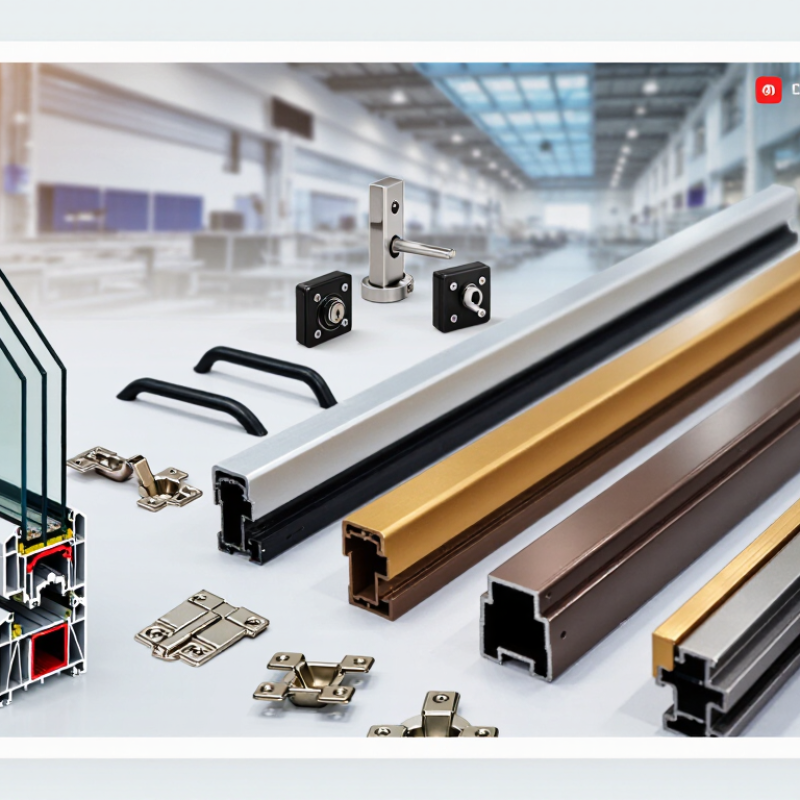
China Top 10 Aluminium Windows and Doors Manufacturers

Scope and Structure of China’s Aluminium Window and Door Industry

China’s aluminium window and door industry is a chain, not a single factory category. It starts with smelting and extrusion, then moves through alloy treatment, profile fabrication, glazing, hardware, assembly, and installation. The National Bureau of Statistics reported 41.59 million tonnes of primary aluminium output in 2023. That figure shows the scale of the upstream metal sector, not the amount used for windows and doors. Not all of it.

Manufacturers sit at different points in this chain. Some focus on extruded profiles; others fabricate complete window and door systems or supply project-specific products. Small workshops and regional fabricators serve local construction needs, while larger plants can handle standardized production and complex orders. The structure is broad, and factory capacity alone does not reveal how well a supplier controls sealing, coating, or installation quality.

Demand is closely tied to building construction, renovation, and replacement. The National Bureau of Statistics recorded 998.31 million square metres of completed real-estate floor space in 2023, down 20.9% year on year. This is a useful demand indicator, but it is not a direct measure of window sales. That distinction matters. Buyers assessing China’s top manufacturers should compare product scope, testing records, project experience, and after-sales support, rather than relying on output claims alone.

Criteria for Selecting Ten Leading Manufacturers

Selecting ten leading aluminium window and door manufacturers calls for evidence beyond polished catalogues and low quotations. Review documented testing for air leakage, water penetration, wind resistance, and thermal performance. Ask for reports that match the actual frame series, glass configuration, and hardware—not a similar product. Details matter.


Production consistency is equally important. Compare finish samples under natural light, inspect corner joints, and check whether seals sit evenly around a sash. Request clear information about alloy specifications, coating processes, quality checks, lead times, and packaging for transport. Strong manufacturers can explain how they handle unusual openings and project changes without relying on vague promises. Visit a factory or request a live production walkthrough when feasible.


Service deserves careful scrutiny. Ask about installation guidance, spare parts, warranty terms, and response times, then verify these details through recent customer references. Export experience can help, but it should not replace product-specific evidence. Rankings are imperfect: a large factory may have impressive capacity, yet a smaller specialist may suit a complex project better. Even published specifications cannot guarantee a smooth installation. Compare comparable products, record the evidence, and note where information remains unclear.

Profiles of Ten Notable Chinese Manufacturers

China’s aluminium window and door sector includes manufacturers with very different strengths. International Aluminium Institute statistics report about 70.6 million tonnes of global primary aluminium production in 2023, with China contributing roughly 41 million tonnes. This scale matters for supply, but it does not prove a window system is durable or well installed.

These ten profiles represent distinct capabilities, not a verified ranking. Profiles 1 and 2 focus on export production and thermal-break frames; ask for test reports and section drawings. Profiles 3 and 4 serve high-rise projects and custom residential renovations, where wind loads and site measurements matter. Profiles 5 and 6 emphasize coastal corrosion resistance and energy-efficient glazing. Small details count. Profiles 7 and 8 integrate glass processing or hardware, while profiles 9 and 10 concentrate on contract manufacturing and project engineering. Their strengths can be hard to compare from brochures alone.

For a practical assessment, request frame cross-sections, glass specifications, drainage details, and installation references. Check whether reported thermal or air-tightness results apply to the complete window, not just one component. A thick frame can look reassuring. It is not a performance certificate. Some suppliers also provide limited project documentation; that deserves a second look before large orders. The cited aluminium data describes raw-material output, not window quality.

Product Types, Materials, and Manufacturing Capabilities

China’s aluminium window and door manufacturers produce casement, sliding, tilt-and-turn, and folding systems for homes and commercial buildings. Each type suits different openings. Sliding panels save indoor space, while casement units can provide a wide opening for ventilation. Large folding doors need careful track design and firm support. Details matter.

Most systems use extruded aluminium profiles, sometimes with thermal breaks to reduce heat transfer. Buyers may also compare powder-coated or anodized finishes, insulated glass, weather seals, and hardware options. A thicker profile alone does not prove better performance; the full assembly, including corners and seals, matters. Not always.

Manufacturing capabilities vary between factories. Some handle profile cutting, CNC machining, surface finishing, and assembly under one roof; others rely on outside suppliers for certain steps. Useful checks include sample inspection, dimensional records, coating consistency, and repeated opening tests. Ask how a factory manages custom sizes and replacement parts, not only standard catalog products. A smooth showroom sample can conceal uneven sealing on a larger unit. Specifications deserve a second look, especially when a project faces strong wind, heavy rain, or frequent daily use.

Aluminium Alloy Strengths Used in Window and Door Profiles

Typical ultimate tensile strength ranges for commonly used aluminium extrusion tempers. Actual values depend on profile thickness, product form, and the applicable standard.

Ranges shown in MPa. Alloy and temper selection is one factor in profile design; system performance also depends on profile geometry, hardware, glazing, and fabrication.

Comparing Quality, Certifications, and International Reach

When comparing China’s top 10 aluminium window and door manufacturers, look beyond polished samples. The UNEP and GlobalABC 2023 Global Status Report found that buildings and construction used 34% of global energy in 2022 and produced 37% of energy- and process-related CO₂ emissions. That makes thermal performance more than a brochure claim. Ask for tested U-values, air leakage, water penetration, and structural-load results for the exact frame and glass combination you plan to buy. A slim showroom sample tells little about performance in wind-driven rain.

Certifications matter when they match the destination market and product scope. Check quality-management certificates, independent test reports, and whether certificate numbers can be verified with the issuing body. A certificate for one product series may not cover another. Look closely at thermal-break continuity, corner joints, drainage paths, and hardware-cycle test results. International reach is also practical: can the supplier provide installation guidance, spare parts, clear packaging lists, and responsive warranty support? Export volume alone does not prove dependable service.

Tips: Request a recent test report for your chosen configuration, not a similar model. Compare like with like: glass thickness, frame size, opening type, and test conditions. Then ask who handles defects after delivery. Answers may be imperfect; that is useful to notice. A careful factory visit—or a live video walk-through—can reveal production checks that a catalogue cannot.

China Top 10 Aluminium Windows and Doors Manufacturers - Comparing Quality, Certifications, and International Reach

Comparison framework: This table lists ten evidence-based criteria for assessing suppliers, not ten named or independently ranked companies. Certification and export claims should be checked against current certificates, product reports, and shipment records.

No. Comparison Dimension What to Verify Relevant Standard or Evidence How to Compare Suppliers
1 Quality management Whether the manufacturing site has a current quality-management-system certificate covering the relevant scope. ISO 9001 A quality-management-system standard; it does not by itself certify a window or door’s performance. Check the certificate holder, site address, scope, issuing body, and expiry date.
2 Environmental management Whether environmental procedures apply to the factory making the quoted products. ISO 14001 An environmental-management-system standard, not a product-performance approval. Confirm the certificate is valid and covers the manufacturing location and relevant operations.
3 Product performance testing Test results for air permeability, watertightness, wind resistance, thermal performance, and, where relevant, acoustic performance. Request reports identifying the tested model, specimen dimensions, hardware, glazing, test method, and laboratory. Compare like-for-like configurations; results for one design or size may not apply to another.
4 European market documentation Whether the specific product and intended use require applicable EU construction-product documentation and CE marking. EN 14351-1 is the European product standard for windows and external pedestrian doorsets within its scope. Ask for the applicable Declaration of Performance and supporting product identification; CE marking is not a general quality grade.
5 North American performance Whether the offered window or door configuration has evidence for the target market’s performance requirements. NAFS (AAMA/WDMA/CSA 101/I.S.2/A440) is a North American standard for windows, doors, and skylights. Check the product designation, size limits, applicable certification or listing, and local code requirements.
6 Energy ratings Product-specific thermal and solar data for the exact frame, glazing, spacer, and configuration being quoted. NFRC ratings commonly report U-factor and Solar Heat Gain Coefficient for products in the North American market. Compare ratings for equivalent product configurations and verify the listing with the relevant program.
7 Aluminium and finish specification Alloy and temper, profile design, coating type, coating thickness, and corrosion-resistance evidence. Request material declarations and finish test reports; applicable specifications depend on the destination market and finish system. Compare documented specifications rather than relying on terms such as “premium aluminium” or “weatherproof.”
8 Factory capability and traceability Whether production controls, inspection records, and batch or order traceability cover the quoted product range. Review factory audit evidence, inspection plans, sample records, and product-specific quality documents. Match the audited facility and product scope to the factory and configuration stated in the quotation.
9 International reach Evidence of experience shipping to the buyer’s destination market and handling its documentation and logistics needs. Redacted bills of lading, export records, references, and destination-specific project documents can support a claim. Verify destination, product category, shipment date, and the supplier’s role; a certificate alone does not prove export history.
10 Warranty and after-sales support Written coverage, exclusions, claim process, spare-parts availability, and responsibility for installation-related issues. Review the signed warranty, project contract, maintenance requirements, and service contact arrangements. Compare coverage periods and remedies only after confirming that the terms apply in the buyer’s country.

FAQS

What test results should I request before choosing a manufacturer?

Ask for air leakage, water penetration, wind resistance, and thermal performance reports. They should match your exact frame, glass, and hardware. Details matter.

Why should test reports match my chosen window configuration?

Different frame sizes, glass thicknesses, and opening types can perform differently. A similar model is not enough.

How can I assess production quality?

Compare finish samples in natural light. Inspect corner joints and check whether seals sit evenly around the sash. Small flaws can matter.

Which certifications should I verify?

Check that certificates fit your destination market and product series. Verify certificate numbers with the issuing body.

Does a manufacturer’s export experience prove reliable service?

No. Export volume alone does not guarantee spare parts, installation guidance, or responsive warranty support. Ask who handles defects after delivery.

What should I look for in thermal performance?

Request tested U-values for your chosen configuration. Thermal performance matters, though one number cannot describe every installation.

Is a factory visit necessary?

When feasible, visit or request a live production walkthrough. Look for quality checks, drainage details, and packaging practices. A catalogue shows less.

Are manufacturer rankings a reliable way to choose?

Rankings are imperfect. A large factory may suit one project, while a specialist may handle unusual openings better. I would compare evidence, not just capacity.

Conclusion

This article explores the scope and structure of China’s aluminium window and door industry, highlighting the range of manufacturers serving residential, commercial, and project-based markets. It explains how leading companies can be assessed through factors such as product consistency, design flexibility, production capacity, technical support, and experience with different project requirements. The profiles of ten notable manufacturers offer a framework for comparing their general capabilities without focusing on any single brand.

Readers will also find an overview of Aluminium Windows & Doors, including common product types, material options, fabrication processes, and customization possibilities. The article considers how quality management, relevant certifications, and export experience may influence supplier selection and international project coordination. Together, these topics provide a practical starting point for understanding the market and comparing manufacturers according to product needs, quality expectations, and intended destination markets.

Henry

Henry

Henry is a dedicated marketing professional with a profound expertise in the company's offerings. With years of experience in the industry, he possesses an impressive understanding of the market dynamics and consumer behaviors that drive success. Henry is committed to sharing his insights through......