An Aluminum Door With Window combines a framed door with one or more glazed panels. The glass may sit beside the frame, above it, or within the door itself. This design brings daylight into an entryway and gives occupants a view outside. It can also create a clear visual link between indoor and outdoor spaces. The details matter.
Aluminum is valued for its strength and resistance to corrosion, but its thermal performance depends on design. A well-made unit may use a thermal break in the frame and insulated glazing. Glass type, weather seals, installation, and local climate also influence comfort. The International Energy Agency’s Global Status Report for Buildings and Construction 2023 estimates that buildings accounted for 34% of global energy demand and 37% of energy- and process-related carbon dioxide emissions in 2022. That wider context makes careful product selection worthwhile, though a door alone cannot determine a building’s energy use.
Look for performance information, not just appearance. The National Fenestration Rating Council (NFRC) provides standardized ratings, including U-factor and solar heat gain coefficient, to help compare certified products. A lower U-factor generally indicates less heat transfer; the right solar heat gain coefficient depends on climate and exposure. Check the manufacturer’s specifications and installation guidance. A narrow frame can look elegant. It may not suit every site. Understanding these trade-offs helps homeowners, designers, and builders choose an Aluminum Door With Window that fits the opening, daylight needs, and practical demands of daily use.
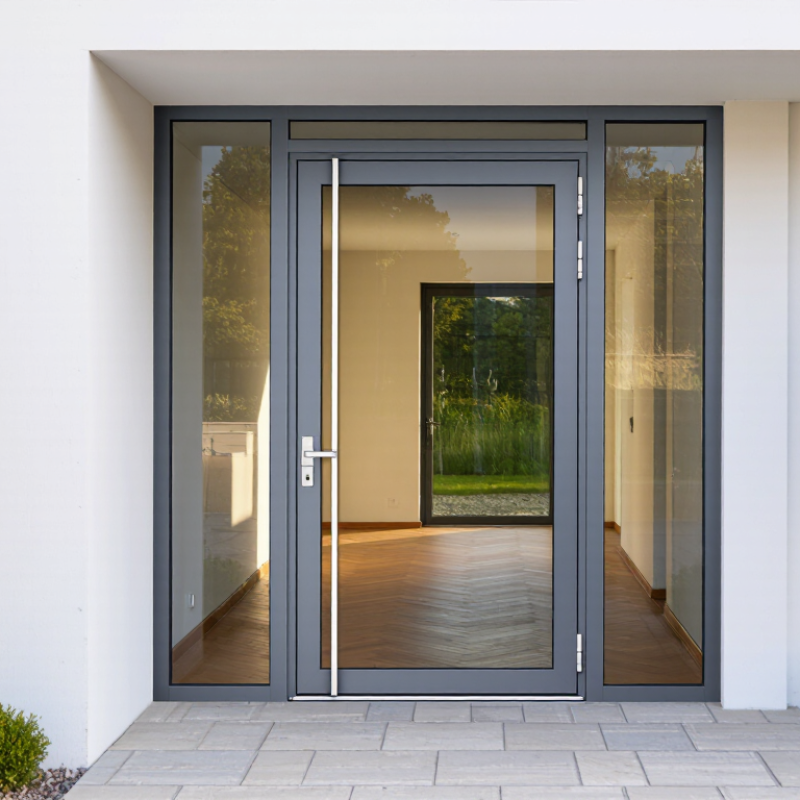
An aluminum door with a window is a door assembly that combines a metal frame with one or more glazed sections. The frame supports the door and provides a stable edge for the glass. Depending on the design, the window may fill most of the panel or appear as a smaller insert near the top. It lets daylight into a room while still allowing the door to open and close.
The basic structure usually includes vertical stiles, horizontal rails, glazing, seals, and hardware. Glass sits within the frame and is held in place by glazing beads or another retention system. Rubber or similar seals help limit drafts and rattling around the glass. Hinges connect the door to its frame, while a handle and lock control everyday use. At the bottom, a threshold may help create a smoother transition between indoor and outdoor spaces.
The details matter. A narrow frame can create a clean, open look, but it may leave less room for structural support. Glass type and thickness also affect weight, visibility, and insulation. Some aluminum frames include a thermal break, a layer that reduces heat transfer through the metal. Not every model has one. A close look at the frame joints, seals, and glass seating can reveal more about the door’s construction than its appearance alone.
What Is an Aluminum Door With a Window?
Frame, Panel, and Glazing: Key Components
An aluminum door with a window combines a rigid metal frame, a door panel, and one or more glazed sections. The frame anchors the door in the opening and supports its weight. Look closely at the corners and edges: sturdy joints help keep the frame square as the door moves. Many frames include a thermal break, a non-metal layer that reduces heat transfer through the aluminum. Small details matter.
The panel is the moving part of the door. It may contain a large glass area, narrow glass inserts, or a solid section beneath the window. Glazing means the glass and the parts that hold it in place, including seals and retaining beads. Double-pane glass can improve insulation, while laminated or tempered options may suit locations where impact resistance is important. The right choice depends on the opening, climate, and how the door will be used. A wide glass panel brightens a dim entry, but it can also reduce privacy. That trade-off is easy to overlook when choosing a design. Check how the seals meet the frame, too; a small gap can invite drafts or water.
The chart compares example glazing build-up thicknesses, not a universal specification. A 6 mm single pane and a 24 mm insulated glass unit (such as a 6–12–6 build-up) are common examples; 6.38 mm laminated glass can consist of two 3 mm panes bonded with a 0.38 mm interlayer. Actual options vary by door design and project requirements. The aluminum frame supports the assembly, while the panel and glazing fill the door and provide privacy, daylight, or insulation.
An aluminum door with a window combines a durable frame with glass that brings daylight into an entryway. Common window styles include a large, uninterrupted lite, several smaller divided lites, or a narrow vertical panel. A single lite gives a modern, open view. Divided lites add visual structure, though muntins can make cleaning slower. Door configurations range from one glazed slab to a pair of doors, or a door with fixed sidelites and a transom above. Sidelites brighten a narrow hall; a transom can bring light deeper into the room. Choose clear glass for visibility, or textured glass where privacy matters. Frame details matter, too. Thermal breaks can reduce heat transfer through aluminum. The U.S. Department of Energy estimates that windows account for about 25–30% of residential heating and cooling energy use, so glazing and installation deserve attention.
Tips: Before ordering, measure the rough opening and note which way the door swings. Check whether the glass is insulated and whether the frame includes a thermal break. For a sunny west-facing entry, consider how glare and afternoon heat will affect the space. A larger glass area can feel welcoming, but it may reduce privacy. I would not choose a style from a photo alone; the actual light, hallway width, and view outside can change the decision.
An aluminum door with a window combines a strong metal frame with glazing that brings daylight into an entryway. Its comfort depends on more than the frame material. Look for a thermal break, an insulating barrier between the frame’s inner and outer sections. This can reduce heat transfer and help limit cold interior surfaces. The glass matters too: double glazing with a sealed air or gas space generally insulates better than a single pane. Details matter.
Security comes from the complete assembly, not the glass alone. A reinforced frame, sturdy hinges, a well-fitted lock, and secure installation all contribute. Laminated glass can help hold fragments together if broken, though it does not make a door impossible to breach. Check that the lock engages smoothly and that the door does not shift under light pressure. A small alignment problem can weaken an otherwise solid setup.
Weather resistance relies on tight seals, careful drainage, and a properly fitted threshold. Inspect the weatherstripping for gaps, especially near the lower corners, where wind-driven rain may collect. Water finds gaps. A thermal break is useful, but it cannot compensate for poor installation or worn seals. I’d also avoid assuming every aluminum door performs alike; glazing, frame design, hardware, and local exposure change the result. Ask for documented performance ratings, then consider the site’s wind, rain, and temperature conditions.
An aluminum door with a window combines a rigid metal frame with one or more glazed panels. It can bring daylight into an entry while retaining a defined boundary between rooms or between a building and the outdoors. Common applications include home entrances, patio access, office partitions, and shopfronts. In a narrow hallway, even a modest glass panel can make the space feel less enclosed. Light matters.
The right choice depends on where the door will be installed. Exterior doors need weather-resistant finishes, effective seals, and glazing suited to the local climate. A thermally broken frame can help reduce heat transfer, though its performance also depends on the glass and installation. For busy entrances, consider frame strength, hardware quality, and how easily the surface can be cleaned. Privacy glass may suit a bathroom or meeting room, while clear glass keeps sightlines open.
Think about safety and daily use, not appearance alone. Ask whether the glass type is appropriate for the door’s location, and check applicable building requirements before ordering. Measure the opening carefully, including the surrounding frame and threshold. This detail is easy to underestimate. A large window may brighten a room, but it can also create glare or reduce privacy; curtains or a suitable glass finish may help.
It has a metal frame supporting one or more glazed sections. The glass may cover most of the panel or sit near the top.
Look at the stiles, rails, glass retention, seals, hinges, handle, lock, and threshold. Small details matter.
A large, uninterrupted glass panel usually gives a broad view and more daylight. Divided panes add structure but can take longer to clean.
Textured glass can obscure the view while still admitting daylight. A narrow vertical panel may also suit a hallway.
Measure the rough opening and note the door’s swing direction. Check the hallway width, too. I might not trust a photo alone.
A thermal break can reduce heat transfer through the aluminum frame. Double glazing generally insulates better than a single pane.
No. The frame, hinges, lock, and installation all contribute. Laminated glass can help hold fragments together if broken, but it is not unbreakable.
Inspect seals, drainage, and the threshold. Look closely at the lower corners for gaps. Water finds gaps.
Afternoon sun may cause glare and heat. A large glass area can feel welcoming, but may reduce privacy. The actual site can change the choice.
An Aluminum Door With Window combines a durable aluminum frame with one or more glazed sections, bringing natural light into a space while maintaining the function of a conventional door. Its main components are the frame, door panel, glass, and seals. Window styles may include a small upper lite, a large viewing panel, or multiple panes, while door configurations can be hinged, sliding, or used as an entry or interior door.
Performance depends on the materials and design. Thermal breaks, insulated glazing, and weather seals can help reduce heat transfer and limit drafts or moisture entry. Secure locks, sturdy hardware, and suitable glass add protection and everyday reliability. These doors are used in homes, offices, and other buildings where light, visibility, and a clean appearance are desired. When selecting one, consider its location, dimensions, opening style, privacy needs, climate, maintenance requirements, and balance of insulation, security, and natural light.

Kross Window